

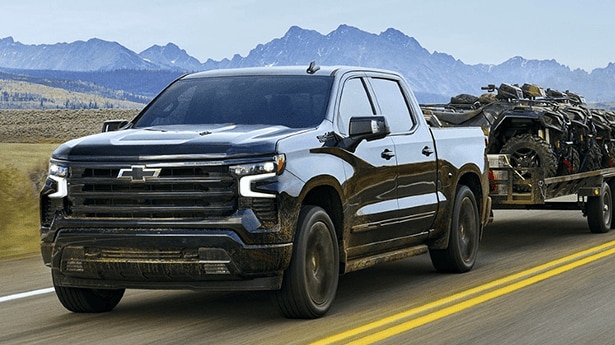
September is widely considered one of the best months to trade in a vehicle because it sits right at the intersection of annual model-year changeovers, third-quarter dealership sales goals, and strong late-summer used vehicle demand. Automakers transition to incoming inventory during September, which motivates dealerships to manage outgoing inventory while actively purchasing quality pre-owned cars, trucks, and SUVs from local owners before autumn officially begins.
Industry data shows that used vehicle demand remains exceptionally steady in late summer, with average used transaction prices holding firm around $30,200 nationwide. At the same time, national manufacturer incentives on outgoing model-year vehicles average roughly 6.5% of the transaction price. This environment creates dual leverage for trade-in owners: strong market values for your current pre-owned vehicle and motivated incentives on incoming or current inventory.
Families driving through Holmes County farmlands around Millersburg often ask our team whether trading in during September is better than waiting for end-of-year holiday clearance events in November or December. The reality is that waiting until the final months of the calendar year allows your vehicle to absorb an additional quarter of depreciation. By taking action in September, you lock in summer pre-owned valuations before the winter market shift takes effect.
When you are ready to evaluate your options, you can reach our sales team with (330) 667-0245 or visit our Millersburg showroom address to start the appraisal process.
How Model Year Rollover and Depreciation Impact Vehicle Values in September
Vehicle depreciation experiences a distinct structural acceleration when incoming model-year vehicles arrive on dealer lots, making September a critical window to trade in before your vehicle takes an age-related residual drop. Vehicles typically lose an extra 10% to 15% of their residual value point as a new calendar model year establishes itself across retail networks.
Industry market analysis confirms that August and September represent the primary window when auto manufacturers execute their formal transition to new model lines. By early September, nearly 90% of new vehicles sitting on U.S. dealership lots represent outgoing 2026 models. As automakers begin shipping 2027 inventory to dealers, outgoing 2026 models may be subject to manufacturer programs, while existing 2025 and older pre-owned models officially shift one year further down the age curve.
For commuters negotiating the daily drive through New Philadelphia, trading in during this model-year rollover prevents your current vehicle from taking that immediate calendar-year depreciation step down. Securing an appraisal while your vehicle is still classified in its higher age bracket helps maximize the return on your equity.
To see what options fit your budget during this transition period, take a moment to explore our selection of new Chevrolet models alongside our pre-owned vehicle lineup.
How Do Dealerships Calculate Your Specific Vehicle Trade-In Offer?
Dealerships calculate a specific vehicle trade-in offer by analyzing live regional auction data, local market supply, vehicle history reports, exact mileage, and calculated reconditioning costs. Professional appraisers synthesize these inputs to establish a fair wholesale baseline that reflects what the market will support.
Standard valuation algorithms evaluate vehicles across a recognized five-tier condition rating scale: Excellent, Very Good, Good, Fair, and Poor. The vast majority of privately owned vehicles fall into the Good or Very Good categories. Mileage plays a major mathematical role in this calculation. For example, a five-year-old crossover with 40,000 miles commands a substantially higher trade offer than an identical model with 80,000 miles because lower mileage reflects reduced mechanical wear on critical components like the engine, transmission, and suspension.
When our appraisers walk around your vehicle, we inspect the mechanical integrity and cosmetic condition to estimate necessary reconditioning expenses. Common wear items directly impact the final appraisal line item:
Mechanical components, including brake pad thickness, rotor condition, and diagnostic trouble codes
Exterior body condition, including door dings, bumper scuffs, windshield cracks, and paint integrity
Interior wear, including upholstery stains, tears, carpet condition, and cabin odors
Tire tread depth and evenness of wear across all four wheels
Complete factory key fob availability and complete owner documentation
Before visiting the dealership, applying online to prequalify for financing options allows our finance team to structure your trade equity directly into your upcoming purchase plan.
Why Quarter-End Dynamics and Autumn Seasonality Favor SUV and Truck Trade-Ins
September creates favorable trade-in conditions because it aligns third-quarter sales quota deadlines with rising regional demand for all-wheel-drive crossovers, full-size SUVs, and pickup trucks. As temperatures drop and seasonal driving conditions approach, dealership buyers seek out four-wheel-drive inventory to satisfy pre-winter shopping trends.
Automakers and dealerships operate on strict quarterly business cycles. Closing out the third quarter on September 30 requires meeting volume targets, which encourages sales managers to offer competitive trade-in allowances to finalize deals. Simultaneously, trade-in demand spikes for utility vehicles equipped with active safety technologies like Automatic Emergency Braking and advanced trailering hardware.
For active families managing daily routines, multi-row utility features like the Smart Slide second row make loading sports equipment, groceries, and child seats seamless. On longer highway drives, tech features like Super Cruise offer hands-free driver assistance that elevates highway comfort. Bringing a truck or SUV to market in September allows you to capitalize on heightened seasonal demand while leveraging quarter-end sales incentives on new models.
Should You Trade In at a Dealership or Sell Privately in September?
Trading in your vehicle at a dealership in September is generally more advantageous than selling privately because it provides an immediate state sales tax credit on your replacement vehicle while eliminating listing expenses, private buyer negotiations, and loan payoff delays.
While a private buyer might theoretically offer a higher gross cash figure on paper, that nominal difference is quickly swallowed up by real-world costs and risks. Selling privately requires paying for detail work, placing advertising listings, managing test drives with strangers, and waiting weeks or months for a serious buyer. Furthermore, trading in at a dealership allows you to subtract your trade-in allowance directly from the taxable purchase price of your next vehicle, saving you hundreds or thousands of dollars in state sales tax.
| Factor | Dealership Trade-In | Private Sale |
|---|---|---|
| Transaction Time | Immediate (same day) | Weeks to months |
| Sales Tax Benefit | Immediate offset on new purchase price | None |
| Existing Loan Payoff | Handled directly by dealer finance desk | Owner must pay off lien before title transfer |
| Safety & Security | Professional commercial environment | Private meetings with unknown buyers |
| Vehicle Preparation | Accepted as-is (reconditioning deducted) | Requires full detail, repair, and safety prep |
To estimate your current vehicle's worth before visiting, you can easily complete our online trade valuation form from home.
What Documentation and Specifications Do Dealers Inspect During Appraisal?
During a September trade-in appraisal, dealership evaluators conduct a structured physical and technical verification to confirm the vehicle's history, mechanical health, and physical condition. Having all necessary documentation organized in advance speeds up the inspection and prevents unnecessary value holds.
Appraisers verify the Vehicle Identification Number (VIN) across all body panels and cross-reference national vehicle history databases to check for past accident claims, title brands, or open recall campaigns. Having documented oil changes, tire rotations, and scheduled service visits proves proper owner care, which helps justify a higher placement within the valuation condition tiers.
Bring the following documentation and items to your appraisal appointment:
Physical vehicle title (if paid off) or current lienholder pay-off information and account details
Valid state vehicle registration card matching the current owner's identification
Valid driver's license for all title holders listed on the vehicle documentation
Complete sets of original factory keys, remotes, and key fobs
Factory owner's manuals and documented service and maintenance records
Addressing minor cosmetic flaws, thoroughly cleaning the cabin, and clearing out personal items prior to your appraisal creates a clean presentation that minimizes estimated reconditioning deductions.
Common Questions About Trading In Your Vehicle in September
Q: How does trading in a car reduce the overall sales tax on a new purchase?
When you trade in a vehicle at a dealership, most state tax guidelines allow you to pay sales tax only on the net price difference between your trade-in valuation and the purchase price of your next vehicle. For example, if you purchase a new vehicle for $40,000 and receive $15,000 for your trade-in, you are only taxed on the remaining $25,000 balance, resulting in direct sales tax savings.
Q: What happens to my existing auto loan when I trade in my vehicle?
Our dealership finance team contacts your lender directly to obtain an official payoff quote. If your trade-in value exceeds your loan balance, the remaining positive equity is applied directly as a down payment toward your new purchase. If you owe more than the vehicle is worth, we can often roll that negative equity into your new financing agreement.
Q: Do minor scratches or worn tires significantly lower my appraisal offer?
Minor cosmetic blemishes and standard tire wear are expected on pre-owned vehicles and are factored into normal reconditioning estimates. While significant body damage or bald tires result in specific line-item reconditioning deductions, everyday wear and tear will not prevent you from receiving a competitive appraisal based on live market wholesale benchmarks.
Q: Is it better to trade in my car in September or wait until December?
September offers a distinct advantage over December because used vehicle market valuations are generally higher in late summer than in late autumn. Waiting until December subjects your vehicle to an additional quarter of depreciation and officially marks your car down another calendar year in age, which typically offsets any additional end-of-year clearance discounts.
Q: Can I trade in a leased vehicle at the dealership before the lease term ends?
Yes, leased vehicles can typically be traded in early just like owned vehicles. Our team requests an early buyout quote from the leasing company, compares that figure against your vehicle's current market valuation, and applies any resulting equity toward your replacement vehicle purchase.
If you have additional questions about the appraisal process, give our team a quick call at (330) 667-0245 or visit our showroom location in Millersburg.
Prices and MSRP referenced in this article are estimates for informational purposes only and do not constitute an offer to sell. See dealer for complete details. Fuel economy estimates shown may differ from official EPA ratings and should not be relied upon as a guarantee of actual vehicle performance.
Categories:
News